
EV (zero emission) buses
Zero-emission (EV) buses
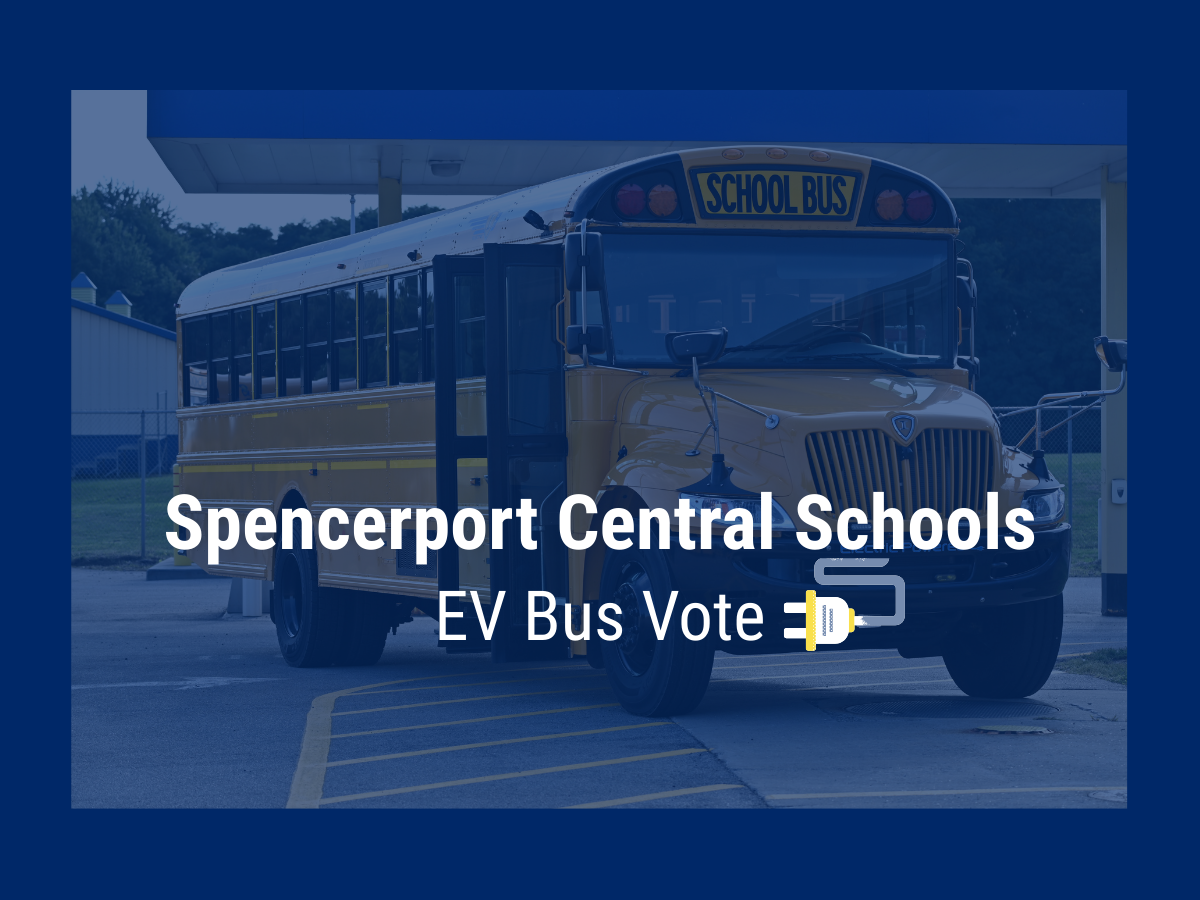 Vote on use of reserves for EV buses defeated
The Spencerport Central School District’s referendum, requesting the use of reserves toward the purchase of two EV buses, has failed to pass. A total of 1,032 residents voted with the following results:
- 743 (72%) no, opposed and
- 289 (28%) yes, in favor
This is the second time voters have defeated this proposition, which was intended to offset the local share of taxes and maintain our eligibility for state and federal grant funding. This is all part of the New York State mandate requiring school bus fleets to be 100% zero-emission by 2035.
Superintendent Ty Zinkiewich said, “We appreciate our community for taking the time to vote today and certainly respect the outcome. Moving forward, we will seek further guidance from our local and state municipal advisors in determining next steps toward meeting this legislative mandate along with clarification involving the waiver process.”
Feb. 3: referendum on zero-emission (EV) buses
The Spencerport Board of Education requests voter authorization to use reserves for the purchase of two zero-emission (EV) buses; if approved,
- the amount would offset the taxpayer portion of this cost, meaning zero impact and no increase
- the district would be eligible to receive additional funding to address infrastructure and charging needs.
This web section details the reason for returning to voters with this referendum, cost breakdown, and ballot information. To watch our videos, please click this EV bus video link.
| Special Cornerstone edition: zero-emission (EV) bus vote |

More EV bus information
-
- Electric School Bus overview, NYSERDA
- NY School Bus Incentive program overview (website), NYSERDA. Overview of funding program, with tables showing how much funding is available for buses and chargers based on different factors.
- Electric School Bus guidebook, NYSERDA. Covers key topics for school districts.
- Electric School Bus content library (website), NYSERDA.
-
Fact or Fiction?
 The vote will determine whether the district will buy zero-emission (EV) buses. Fact or fiction?
Fiction. The fact is that New York State has mandated that all districts transition to zero-emission buses by 2035.
Our community is voting on the use of our existing reserve fund to purchase two zero-emission buses. No tax increase. Remain eligible for significant federal and state grant funding.
 Zero-emission buses are unreliable in cold temperatures. Fact or fiction?
To Be Determined. EV buses function at all temperature ranges. Studies have shown that battery range can decrease in cold weather; however, today’s ESB models can travel 100-200+ miles on a charge and in cold weather range 70-80% and 50-60% in the most extreme circumstances. Longer trips for school activities, athletics or music do not apply, as we contract with charter bus companies for such events.
Side note: the Gates Chili School District has not had any issues with ESBs in the winter.
- Cornell University, NYSERDA, and Gates Chili CSD
 ESBs do not really impact the environment and conventional fuel is better. Fact or fiction?
Fiction. In fact, a 2024 Harvard T.H. Chan School of Public Health study found that replacing diesel school buses with electric ones can generate up to $247,600 in climate and health benefits per bus.
According to the American Lung Association, use of electric vehicles will improve student health and reduce greenhouse gases resulting in significantly fewer asthma attacks annually.
- Harvard University, American Lung Association
 ESBs do not have the battery range to meet our needs. Fact or fiction?
Fiction. In fact, according to the NYS Energy Research and Development Authority (NYSERDA), the average school bus travels 80 miles a day, even in rural districts, which is achievable with today’s ESBs and will only get better with technology.
 ESBs have more safety concerns, including risk of fire and overall reliability. Fact or fiction?
Fiction. In fact, bus fires, including for school buses, accounted for only 1% of all vehicle fires in 2021, none of which involved electric school buses.
Further, electric school buses must meet rigorous safety standards, which includes extensive battery testing, structural protections, and automatic electrical disconnects.
- NYSERDA, National Fire Protection
Association, Electric School Bus Initiative and
World Resources Institute
 ESBs are more difficult to maintain. Fact or fiction?
Fiction. In fact, ESB operators and operators of diesel- and gasoline-fueled buses must adhere to the same federal and state safety requirements and follow similar maintenance recommendations.
Generally, ESBs require less maintenance yet they require certain care regimens to ensure that they run safely and efficiently throughout their lifetimes.- NYSERDA, School Transportation News
-
Electric School Buses (ESBs) = Zero-Emission Buses = Electric Vehicle (EV) Buses
These terms and acronyms are often used interchangeably among all state, regional and local agencies. The wording, zero-emission buses, is used in our fleet electrification plan and community referendum.
NY School Bus Incentive Program NYSBIP is a voucher incentive program which will accelerate the deployment of zero-emission school buses and charging infrastructures throughout New York State. A total of $500 million is available for this implementation.
Environmental Protection Agency Clean School Bus Program (EPA CSB rebates) is federally-funded through the Infrastructure Investment and Jobs Act, providing $5 billion over five years (FY 2022-2026) to replace existing school buses with zero-emission school buses.
A Fleet Electrification Plan (FEP) is a roadmap to electrify a school district’s entire school bus fleet by 2035. This includes a comprehensive evaluation of existing operations and electrical capabilities. The plan will serve as a blueprint to help districts make informed decisions about bus and infrastructure purchases and installations. Completing a FEP also unlocks additional funding for electric school buses and chargers, prepares fleet owners to apply for incentives, and prepares school districts to meet their Education Law 3638 reporting requirements.
New York State Energy Research and Development Authority (NYSERDA) provides resources, technical expertise, analysis, and funding to school districts to complete FEPs.

Key points on Feb. 3 vote
| Video: why a second vote? |
Megan Sarkis, vice president of the board of education, outlines the factors that influenced the board’s decision to conduct a second community vote – both to ensure fiscal responsibility and an open and transparent process for our Spencerport taxpayers.
| Video: zero-emission buses and the referendum |
Spencerport transportation’s Julie Churnetski, director, and Chris Nichols, assistant director, provide a brief overview of the legislative mandate on zero-emission buses, as well as their efforts to date to meet this requirement.

